
Welcome to Gold Mine International. GMI helps you build a profitable home based business. Currently, there's a vast amount of interest in work at home programs, so now is the time to get in and start building your business.
In GMI, the work you do now will provide residual income for you and your family for years to come. Once you've chosen a business plan, you'll need to promote it. Please feel free to use the resources on this site and good luck with your business.
If you're looking for an honest online business opportunity, GMI is the best choice.
For more information visit
www.goldmineint.com or cell 00923215709003
Make Money By Uploading!

Tuesday, April 21, 2009
All you have ever dreamed
Hot video game gear at E3

LOS ANGELES, California (AP) -- Plenty of gadgets shown at this year's Electronic Entertainment Expo (E3) had absolutely nothing to do with the...
The handheld wars of late have focused on Sony's sleek PlayStation Portable and the interactive Nintendo DS. The Gizmondo from Tiger Telematics, Inc., however, intends to be a serious third contender if its able to deliver on its innovative promise.
The Gizmondo looks to be the Swiss-Army knife of handhelds with its unique blend of technology that includes GPS satellite tracking, a digital camera and a gyroscope.
Oh, and it plays digital music, movies and video games on a 2.8-inch color screen, too. It's already available in Europe and should appear stateside in August. Prices will start at $230.
QMotions-Baseball
Clicking your computer mouse is hardly the most authentic way to play a few innings of a baseball video game. Why not swing a real bat? For $80, the QMotions-Baseball system replaces the game pad, letting you use a bat of your choosing.
The setup includes a special bat collar that wirelessly sends swing movement to a home plate receiver you plug into an Xbox or PC. The device, available this month, works with big league baseball games including "EA Sports MVP Baseball" and "ESPN Baseball."
Theater Experience PSP
Anyone who's drained their Sony PSP battery after watching a few movies will appreciate the Theater Experience PSP from Nyko Technologies. The extra five-hour battery life provided by this device is certainly welcome, but it also boosts the PSP's rather tinny audio with a more robust set of stereo speakers, all wrapped in a flip-open aluminum carrying case.
One of the most welcome inclusions is the least techie: an adjustable stand. No more straining your wrists trying to hold the PSP at just the right viewing angle for hours on end. Look for it in June, for about $70.
PowerPlay 5.1 Media Chair
The Empower Technologies PowerPlay 5.1 Media Chair, as the name suggests, is the center of a surround sound stereo system that'll make those explosions in "Halo 2" rumble through your entire body. The setup, which costs $999, remains a prototype and it certainly could use some aesthetic help: as it stands -- it's doubtful you'd see this black and tubular metal piece of furniture anywhere but the most macho of bachelor's pads.
Logitech Cordless Precision/Attack Controller
We've heard a lot lately about how the upcoming consoles will feature wireless controllers. Big deal. They've been available for the existing consoles for quite a while now. Two new offerings from Logitech bring the affordable freedom of tetherless gaming to the PlayStation 2 and Xbox.
The semi-translucent blue $30 Precision is compatible for the PS2, while the see-through green $40 Attack works with the Xbox. So what's new this time around? Logitech says the Precision and Attack will last 300 hours on just two AA batteries. And no tripping over cords anymore.
Saitek Pro Gamer Command Pad
Coming in September, this $40 keyboard ad-on should appeal to fans of first-person shooters, or any computer game were you'll need a nimble keyboard to get around. This accessory looks like a separate numeric keypad with a special thumb rest. The keys are laser-etched and glow blue.
Google Users Can Now Personalize Home Page

Google users can choose from 12 "modules" to add to the home page, including one that displays the first few messages from a user's Gmail e-mail account.
Google (Nasdaq: GOOG) made the boldest change yet to its famously austere home page Thursday, allowing users to turn it into a customized palette of news, weatherconditions, movie show times, e-mail messages and more.
The new personalized home page is part of larger strategy dubbed "fusion" that aims to fuse together Google's services with content on the Web, said Marissa Mayer, director of consumer Web products for Google.
"Our goal here was to give users tools to customize and organize their own information," Mayer said.
The changes to the home page are strictly optional; users need to log in with a Google account and visit the Google Labs Web page to activate the feature. They can switch back to the standard home page at any time by clicking on a "Classic Home" link.
New Look and Feel
Nonetheless, many observers viewed the offering as a milestone moment for Google, which has steadfastly protected the crisp, clean look of its home page. The move is also sure to ignite debate over whether Google is gravitating toward becoming a Yahoo-like Web portal, with all of its services tightly integrated and visually grouped together.
Mayer said the service is "not about bringing all of Google's products and functionalities together."
But some search experts saw it differently.
"I don't see how you can avoid the label," said Andy Beal, a vice president for WebSourced, a search-engine marketing firm. "When you touch the lives of people and everything that they do online, and then you put it all in one place, you're essentially a portal."
For now, the personalization options for the home page are limited, largely because the company rushed to get the service out the door six weeks ahead of schedule for an unprecedented, daylong briefing for journalists on Google's business practices and technology. Users can choose from among 12 "modules" to add to the page, including one that displays the first few messages from a user's Gmail e-mail account.
Mayer said Google would expand the service in the next month or so to allow users to add nearly any content of their choosing to their home page. She said Google may even let users add modules that pull in e-mail messages from other providers, such as Yahoo (Nasdaq: YHOO) .
RSS Technology
The technology behind the personalized home page is known as RSS, which provides a way for Internet users to subscribe to a wide array of content, including news headlines.
Netscape Communications helped develop the technology in the late 1990s, and offered its users a customized home page strikingly similar to what Google is now offering. Yahoo has allowed its users to create personalized news pages for nine years through a service called My Yahoo. Last year, Yahoo adopted RSS technology so users can subscribe to the far wider universe of content.
The similarities to My Yahoo were not lost on the hundred or so journalists and handful of analysts who had showed up.
Mayer distinguished the new Google service from other, comparable products by stressing its ease of use and the page's "clean and crisp and Googly" look and feel.
Yahoo was not impressed by the new Google feature. The Sunnyvale company released a statement touting its "long and successful history in personalization."
Response From Yahoo
"We launched My Yahoo! nine years ago and last year redefined personalization again by providing access to millions of content sources from across the Web," the company said. "My Yahoo! is the No. 1 personalized Web page in the world and the world's largest RSS reader."
It may have taken Google awhile to follow Yahoo's lead but the move was inevitable, according to Beal.
"Regardless of the criticism that they are years late, they had to have this," he said.
Google also gave a sneak peek of Google Earth, the 3-D satellite imagery software it has been developing since the acquisition of a local company called Keyhole last year. Google says its now has 3-D imagery of the whole Earth and has merged the technology with its search engine and mapping service.
The software will be available in the next two weeks as an upgrade for Keyhole subscribers. Google would not discuss plans to make the technology more widely available.
Rules For Successful Self-Promotion

To be truly effective at delegating, you must have the right attributes and attitudes about delegation. These positive attributes, outlined below, include personal security, risk taking, a trusting nature, task-orientation, and a good degree of patience.
Personal Security
Managers who are good at delegating feel confident in their abilities and position in the company and have a positive attitude about delegating. They consider delegating a means to prepare team members to be future managers. They view delegation as a means of achieving their own, and the company's, performance goals.
Risk Taking
Good delegators are willing to take risks to get tasks done, stretching resources and making mistakes. They are willing to accept and learn from failure. They must allow both less experienced and more knowledgeable employees to make decisions.
Trusting Nature
Good delegators are willing to trust another to perform a tasks for which they alone will be held responsible. They grant such trust with full knowledge of any limitations the team members may have, such as lack of experience. They allow the team member to supply, without interference, his own ideas as to how an assignment should be completed. They don't revoke their trust after an assignment is completed. Team members need to be supported even if the actions they take are criticized by others. For example, if a person is given authority to conduct an audit, that person should be supported regardless of the audit's finding.
The following general guidelines help increase team members trust.
* Backstop team members' decisions. Even though you don't agree with team members' decisions, back them up when they need support, especially in front of others.
* Don't harp on team members' mistakes. Team members usually realize when they make a mistake. Don't dwell on mistakes. Give employees the opportunity to correct them.
* Don't spy on team members. Set clear guidelines for monitoring progress that are known to each team member. Stick to the agreed-upon guidelines, and don't spy on team members to determine their progress.
* Don't withhold information as a test. Withholding useful information leads employees to mistrust you and your motives.
* Be open. Don't try to hide your own mistakes from team members. Freely share information necessary for a team member to perform her job.
* Clarify expectations. Share your expectations with team members--in advance. * Show respect. Treat team members with respect and courtesy.
* Don't manipulate. Be straightforward in the delegation of tasks. Don't manipulate employees with guilt or implied rewards.
* Examine assumptions. Make sure you are making valid assumptions. For example, if a team member resists performing a task, don't immediately assume the employee is looking for the easiest way out.
Task Orientation
Effective delegation establishes and employs a means of control including channels (progress reports, review sessions, etc.) for reporting progress and problems as well as a schedule for when reporting should take place (daily, weekly, monthly, etc.). If you aren't comfortable with the amount of feedback and the level of control, establish means for additional monitoring. If you are especially concerned about a particular assignment, tell the team member that you are going to follow up frequently on the project's progress. Such warning helps to buffer any feelings of meddling.
When necessary, be willing to intervene and hold team members accountable for their action or lack of action. You can redirect team members' efforts, give them additional authority to complete the assignment, or take back the assignment if the satisfactory completion is doubtful. Accountability must extend to the completed assignment. If the assignment is done poorly, reprimand the responsible team member. Adjust future assignments so the team member gets smaller, less significant tasks until he or she once again demonstrates willingness and competence to assume greater responsibility.
Ample Patience
A manager who is a good delegator realizes that results take time. She can see what needs to be done but doesn't order it done a specific way. She is willing to allow team members the chance to develop judgment by letting them try their own methods. If a project falls behind schedule, the manager makes certain the team member has a plan for meeting the deadline; the manager must allow time for delegation. She must allow time for assignment of specific tasks as well as for inexperienced employees to be trained.
In summary, as Thomas R. Horton, former CEO of the American Management Association, says: "The process of delegation must begin by a spark of faith. Kindled by accomplishment, it is ultimately sustained by trust. Effective delegators are the managers who believe in their people as much as in themselves and who know that from that belief comes not just accomplishment, but growth."
Five Assumptions Of Creative Managers

The anomalies of the world fascinate me and raise fundamental questions that I ponder far into the night.
We know that groups of individuals can - and do - learn. In fact, there is convincing evidence that the competitive advantage almost inevitably will go to those groups who learn to make their collective "whole" greater than the sum of their individual parts.
We see it in sports, in the performing arts, in science, and occasionally even in the workplace. In Asia and Continental Europe, for example, we find a deep-seated belief that real learning takes place in groups. "Break-It!" thinking understands that knowledge accumulates within organizations and between individuals who understand how to share information, pool resources, and creatively collaborate.
Here are the basic premises of my new paradigm - my "high five," which I offer to those among you who are committed to continuous innovation and rethinking - for "Break-It!" Thinkers.
1. Today, the rate of change is exponential, not incremental. This is a crucial starting point. The world changes so fast that it is difficult to use conventional modes of thought, measurement, or planning.
2. Things will never get "back to normal." This is normal! The so-called glory days of the bygone past have gone.
3. Plan as we may, the future has plans of its own. Because exponential change is here to stay, we have to look down the road with 20/20 vision, focusing on the next 20 minutes and the next 20 years, simultaneously. The bad news is that the number of senior executives and key managers who possess 20/20 vision is small. The good news is that this is a learnable, cognitive skill that a few training programs, including my own, can teach you.
4. Organizations that "learn how to learn," that ask the right questions, and "find out how to find the answers," will thrive in a global economy. Astute organization theorists, such as MIT's Peter Senge, are absolutely correct in proposing that a continuously learning organization is healthy and highly productive. In my new paradigm, the organization's "verbs" will supplant its "nouns." That is, diverse methods and responsive processes will be more powerful than "tried and true facts" and "off the shelf systems." And asking the right questions at the right time will determine the most sustainable and viable answers.
5. Productive organizations that will excel in the '90s will be those that value flexibility, diversity, integrity, cooperation, and innovation. It is no longer sufficient to "add value" to products. We have to add values into the process and the product. Customers, creditors, consumers and our conscience now require it.
In my work with top management, I find my "high five" premises extremely useful. They stimulate dialogue, raise provocative questions, and, at the very least, increase the collective IQ over the century mark!
Where do you agree and disagree on these premises? What would you add if you were to make your own list?
Recognizing Customers

Marketing has been well-defined as anything you do to get or keep a customer.
I break marketing into seven specific components for further analysis. These are:
* advertising
* sales
* publicity
* customer service
* planning
* research
* merchandising
I take it for granted that marketing involves building relationships with people, whether prospects or customers. The most profitable marketing involves selling to someone who already knows you well and trusts you, i.e., has a positive relationship with you.
Recognition vs.
Service This month I want to cover the distinction between customer service and customer recognition. Restaurants make an excellent example of this point.
A friend of mine, Jack Sweeney, a sales expert, was just mentioning how nice it is to take a customer into a restaurant where they know you and treat you like you own the place. Not only do customers like being wined and dined, but they like the feeling of being specially taken care of.
That same day I was reading a survey by the National Restaurant Association which showed people's ranking of important elements in the dining experience. First was recognition, service, and last was food. Since restaurant people had been focusing on food and service, they weren't too pleased with these results. But the important point is that we have all tended to overlook the importance of recognition.
Recognition is Tops
By recognition, we mean that when you go to the restaurant, you are literally recognized. People greet you by name. They clearly know who you are and they treat you like somebody important. This is the benefit of being a regular customer in some restaurants. (The same thing should apply to anybody you do business with.)
It's not enough to provide good service. People are really looking for a personal touch, an acknowledgment of them as someone who is special. If you only get a good meal, you're not getting enough.
Legendary Service
If you can give people acknowledgement and personal recognition, they will feel good, even if your product is only average. Too many customer service programs focus on doing well that which is expected. Some talk about giving more than what is expected. But I don't know of any that talk about acknowledging and recognizing the customer. To create the legendary service that people tell stories about for years, like Nordstrom's department store, you need to focus on learning who your customers are and making them feel appreciated.
If you serve other people within your company, think about the relationships you are building with them. No matter how good a job you do, if they don't come away positive about the experience, then you're not doing your true job in "customer service." When people are paying you money directly across the counter, it should be much more obvious that you want them to come away from the experience enthusiastic, not just having had "good service."
Management Secrets

Getting other people to do what needs to be done is a simple, but pretty basic, definition of management. But management certainly isn't simple, at least not the way we Americans approach it.
If you consider the vast sums of money we spend on formal management education - not to mention what's spent on books, software and other tools - one would think that this management mystery should have been solved a long time ago. But we're still looking for those elusive management "secrets" that will transform us and our organizations.
This Don Quixote-like quest for management "Answers" is lucrative for those in the management answer business. In that category I put consultants, who never met a business problem they didn't like or couldn't solve, and authors, who now are culling management advice from the most unlikely sources. For example, if you find the management secrets of Moses, Jesus or Attila the Hun wanting, read the book that reveals the managerial insights of England's Queen Elizabeth I.
While I don't doubt that Lizzie gave the MBA-types of the 16th century a run for their money, her insights probably won't enlighten your boss, help you do your job better or get you a raise. The truth of the matter is - notwithstanding the millions paid to CEOs - there are no secrets to managing. Being a good manager requires reasonable intelligence, common sense, a desire to accomplish something and a bit of brass.
Since I qualify as a management expert (I've reported to managers my entire working life and have been one, too; and I'm displaying brass), let me tell you the five signs of good management. Whether or how good managers are born or made, who knows. But look for these signs that a company has them:
1. The company knows its business. The least convoluted the response to "Just what is it that XYZ Co. does?" the better. If management can't explain what the company does in simple English, it probably doesn't know.
2. The business makes money. Call me old-fashioned, but when a company earns a profit it means that management has at least figured out what people in the real world want and how to produce it for less than the price people are willing to pay.
3. People listen. Good management means that humility is encouraged, and arrogance is discouraged. Salespeople listen to customers, managers listen to salespeople and bosses listen to workers. This is the way a company learns, improves and grows. If management doesn't listen, it's not just deaf, it's dumb.
4. Reasonableness rules. It's important to aim for the stars, but if management demands excessive returns or non-stop extraordinary performance - without understanding how work gets done or without providing adequate resources - watch out for severe politicking, blaming and corporate upheaval.
5. A sense of mission. Does making a millionaire CEO richer or completing a meaningless project turn you on? I hope not. Good management gives people emotionally satisfying reasons to care about their work. Sure, pay is important, but good managers know the importance of caring about something bigger.
Saturday, April 11, 2009
Dell Introduces Two Lead-Reduced Desktops

The move comes ahead of the European Union's July 2006 deadline requiring electronics shipped in the EU to be completely lead-free....
Dell (Nasdaq: DELL) the world's largest personal computer maker, yesterday announced two environmentally friendlier desktop computer systems for business users
Dell said lead-reduced versions of its OptiPlex GX520 and GX620 corporate desktop computers were available immediately worldwide.
Eliminating Hazardous Chemicals
The new models eliminate lead from the power supply, motherboard and chassis, company officials said. However, Dell said lead still may be present in certain other components as it continues to work with parts suppliers to eliminate the material.
The move comes ahead of the European Union's July 2006 deadline requiring electronics shipped in the EU to be completely lead-free. Dell, which already bars the use of other hazardous chemicals such as cadmium and mercury, said it would meet the EU requirements before the deadline.
Prices will start at US$549 for the GX520 and $579 for the GX620. The models will be available in seven configurations, including mini-tower and desktop form factors, and will include Intel (Nasdaq: INTC) Pentium 4 and Celeron D processors running up to 3.8 gigahertz.
Environmental Initiatives
At a news conference yesterday in Monte Carlo, Monaco, Dell also touted its environmental initiatives, saying it recycled more than 24 million pounds of used computer parts last year in the United States, a 234 percent increase over the previous year.
Shares of the Round Rock, Texas-based company rose 30 cents to close at $40.60 in Thursday trading on the Nasdaq Stock Market, where they have traded in a 52-week range of $32.71 to $42.57.
Intel, which opted to hold off on 64-bit capabilities in the new mobile chip technology, indicated the shared cache between the two cores of Yonah
Intel wound up a week of multi-core processor madness at Computex in Taiwan, fittingly, outlining its newest mobile chip technology: the dual-core "Yonah" processor and accompanying chipset and wireless module
In addition to the dual-core technology, which has put Computex in the spotlight this week with desktop offerings from both Intel and rival AMD, Yonah is created with a smaller, more efficient 65-nanometer process and represents advanced multi-core technology in the two cores' ability to share integrated cache.
While the dual-core desktop chips announced and released this week represent increased performance and functionality for some applications and users, Yonah -- an update to Intel's Pentium M and Centrino mobile line -- promises longer battery life and a significant boost in performance from the two, more integrated processor cores, Intel said.
"The main thing is it's going to be the first dual-core for notebooks," Mercury Research President Dean McCarron told TechNewsWorld. "It's just one more indicator that the industry is changing in this direction [toward multi-core technology]."
Cores Get Closer
While both Intel and AMD have outlined their strategies and offerings for dual-core designs, Intel's briefing on Yonah this week was the first discussion of dual-core in the mobile setting.
Intel, which will reportedly release the mobile chips early next year, said its dual-core design for notebooks and mini PCs consists of a more integrated, multi-core design, saving both space and power in the process.
The company, which opted to hold off on 64-bit capabilities in the new mobile chip technology, indicated the shared cache between the two cores of Yonah chips would significantly boost performance too, thanks to a single bus embedded in the chip and the resulting integrated cache. The chips will also be offered at a lower price with a single core design, according to Intel.
Smaller is Better
Mercury's McCarron said the shared cache in Yonah and the fact that the chips will be made using smaller, more efficient 65-nanometer manufacturing was indicative of processor performance gains, as well as bigger chip-maker margins.
"Usually, we see fairly significant product improvements with process improvement," McCarron said, adding that the smaller transistors of the new process helped make space available for two processor cores.
McCarron said power savings and a higher degree of scalability would be the biggest advantages of the Yonah notebook technology, adding while huge demand is not expected for the chips, they are nevertheless easier for Intel to produce.
More Performance, Less Power
Gartner research vice president Martin Reynolds told TechNewsWorld the "decent" performance boost from dual-core design will make Yonah compelling for notebook users of applications such as Acrobat, Photoshop, MP3 processing, DVD burning and compression, media editing, and soon, games.
A second core also means that systems will remain responsive even if processes such as virus scans or operating system activities take over the first core, according to Reynolds, who added traditional productivity applications such as PowerPoint, Excel or Word do not use enough power to matter.
Reynolds said while a dual-core processor can be clocked at a lower speed than a single-core processor and deliver better overall performance, it also does so with less power.
"The reduced power is very valuable," he said. "Users will notice longer battery life when running compute-intensive tasks, and find that their notebooks can be more responsive."
Reynolds said Intel is looking to make up for past difficulties in conserving power. He added the 65 nanometer process and integrated cache will bring performance gains that in a few, rare cases "could be substantial."
"Key for Intel is gaining ground on power consumption," he said. "They yielded some efficiencies with Dothan. We'll be looking for Yonah and chipsets to recover some of that."
Healthy Vegeterian Diet
What is a vegetarian diet?
A vegetarian diet is one that excludes meat, poultry, game and fish. Vegetarians also aim to avoid eating battery hen eggs and any slaughter house by-products. Some people incorrectly call themselves vegetarians just because they avoid red meat or eat meat only occasionally - a recent survey of 9,000 "vegetarian" women in England revealed that only half of the group surveyed never ate meat or fish!
A vegan diet excludes all animal foods and their by-products such as eggs, milk, cheese and yoghurt.
Are vegetarians more healthy?
Studies in the past have suggested that vegetarians have a healthier diet that is lower in fat than their meat-eating neighbours, but more recent data on the nutritional composition of convenience vegetarian meals has cast doubt on whether a vegetarian diet is in fact low in fat. This healthier image of vegetarian diets is for example thought to attract the attention of young figure conscious teenagers who take it up in the hope that it will lead to weight loss. However, recent analysis of over 200 vegetarian convenience foods has shown that they contain between 33% and 50% fat. Therefore many of these products contain a similar, and in some cases a greater amount of fat, than their meat-containing counterparts. While vegetarian convenience foods may appear attractive, they are not necessarily a healthier choice and simply swapping meat for meat replacements will not guarantee a low fat diet.
There is no doubt that recent food scares have cast suspicion on the quality and safety of food and it is reassuring to know that the Food Safety Authority of Ireland is working with food processors and retailers to ensure that our food is safe to eat. Nonetheless there is a body of people who prefer not to eat meat, poultry or fish and so they have to rely on foods like cereals, fruit, vegetables, pulses, dairy products and nuts to provide them with the nutrients they need for health.
Where should I start?
As with any dietary change, it is important to plan your diet well and gain as much knowledge about vegetarian nutrition as possible. It is a good idea to do as much research as possible before embarking on a vegetarian diet as that way you will be well informed and avoid common pitfalls. Remember, it is always better to prevent a problem rather than try to cure one. It is worth investing in a few vegetarian cookbooks (they start at €2.50) and also look out for books in the library so that you can experiment and find recipes that suit your palate.
It is also a good idea to encourage all the family to enjoy vegetarian meals and a suggestion is that one day a week one family member takes a turn at cooking a vegetarian meal for the family. For example, make a date with your family to have a vegetarian meal every Friday at 6.30pm. It is important that you eat a wide range of foods to help meet your nutritional needs and that you replace the energy, protein and iron that you are missing out on.
Alternative good sources of protein are; cheese, yoghurt, milk, eggs, beans (all types such as kidney beans, butter beans, beans in tomato sauce, peas, chick peas, lentils, peanuts and hummus). Alternative good sources of iron are eggs, fortified breakfast cereal (check the label), wholemeal bread, broccoli, spinach, prunes, apricots and Bovril. For your body to make the best use of the iron in plant based foods, it is essential to eat a vitamin C rich food at the same meal as the iron rich food. Good food sources of vitamin C are citrus fruits, strawberries, raspberries, blackcurrants, mango, nectarine and juices made from these fruits (e.g smoothies and freshly squeezed fruit juice).
Some practical advice for the vegetarian
Eggs are an excellent source of protein, but have received some bad press in the past. Up to five eggs per week can be eaten as part of a healthy diet.
Frozen vegetables are just as nutritious as fresh vegetables.
Cooking vegetables for long periods of time can diminish their vitamin content. Alternative cooking methods such as steaming, roasting, stir frying or microwaving should be used to cook vegetables in addition to boiling.
Hummus is a paste made from chickpeas. You can make it yourself or buy it ready made in the supermarket. It is a high protein food and can be used as a sandwich filler or as a dip with vegetables or tortillas.
Tofu is made from soya bean curd. It is a high protein food and is often used as a substitute for meat or chicken in stews and casseroles. It can also be eaten cold in salads or it can be steamed or fried.
The Irish Nutrition and Dietetic Institute have an information booklet on all the important nutritional issues in relation to a vegetarian diet. A contact number to receive a copy of this helpful booklet is 01-2804039 Mon-Thurs 9.30am-12pm.
Essential vegetarian foods
The following is a list of the essential vegetarian foods you should stock up on:
Cupboard
Flour tortillas
Tinned tomatoes
Tinned butter beans
Tinned kidney beans
Tinned chickpeas
Eggs
Dried pasta
Date
Dried apricots
Sesame seeds
Lentils
Bovril
Extra virgin olive oil
Porridge oats
Fortified breakfast cereal
Curry powder
Fridge/freezer
Tabouli
Hoummus
Tofu
Milk
Vegetarian cheese
Orange juice
Crème fraiche
Fruit and natural yoghurt
Pitta bread
Frozen peas
Frozen corn
Mixed frozen vegetables
Vegetable rack
Garlic
Dried tomatoes
Onions
Peppers
Potatoes
Fruit bowl
Always full with a variety of fruit
Shilpa calls on God

First-time IPL team owner Shilpa Shetty is leaving no stone unturned to ensure that her boys have a great showing in South Africa. She is seeking support not only from fans, but from God Almighty as well.
On Thursday, the actress was at the Golden Temple in Amritsar, clad in a sunny yellow churidar-kameez; last month, she had met with Reverend Jesse Jackson Sr, one of America’s foremost religious and political figures, in London; and her blog sends out appeals for best wishes. “Thank you to all those who’ve been wishing our team Rajasthan Royals. We always need your support,” she has written.
In Amritsar, there was no sign of the Bollywood siren that Shilpa usually is. Covered from head to toe, only her big gold watch, bigger sunglasses and the large rock on her ring finger could tell an onlooker that this was no ordinary devotee. Her mother, sister Shamita Shetty and boyfriend and business partner Raj Kundra were with Shilpa. The group also included Jeetendra and his wife Shobha.
According to reports, while she was heading back to the airport with her family, Raj played Shilpa’s real-life hero by bashing up a man who tried to misbehave with her. The man touched Shilpa and as she cringed, a furious Raj hit him.
This is not the first time the actress has shown her religious side. She had said in an earlier interview, “I visit temples often. When I am in Mumbai, I walk to Siddhivinayak [temple] every Tuesday. I strongly believe in God.” When we probed the motive of this darshan and parikrama at the Golden Temple, a source revealed, “She considers visiting holy places to be lucky, and makes sure to go for a darshan before getting started on any important task… this time, the IPL.”
On Thursday, the actress was at the Golden Temple in Amritsar, clad in a sunny yellow churidar-kameez; last month, she had met with Reverend Jesse Jackson Sr, one of America’s foremost religious and political figures, in London; and her blog sends out appeals for best wishes. “Thank you to all those who’ve been wishing our team Rajasthan Royals. We always need your support,” she has written.
In Amritsar, there was no sign of the Bollywood siren that Shilpa usually is. Covered from head to toe, only her big gold watch, bigger sunglasses and the large rock on her ring finger could tell an onlooker that this was no ordinary devotee. Her mother, sister Shamita Shetty and boyfriend and business partner Raj Kundra were with Shilpa. The group also included Jeetendra and his wife Shobha.
According to reports, while she was heading back to the airport with her family, Raj played Shilpa’s real-life hero by bashing up a man who tried to misbehave with her. The man touched Shilpa and as she cringed, a furious Raj hit him.
This is not the first time the actress has shown her religious side. She had said in an earlier interview, “I visit temples often. When I am in Mumbai, I walk to Siddhivinayak [temple] every Tuesday. I strongly believe in God.” When we probed the motive of this darshan and parikrama at the Golden Temple, a source revealed, “She considers visiting holy places to be lucky, and makes sure to go for a darshan before getting started on any important task… this time, the IPL.”
iPhone apps are changing the world of software and the way we work and play
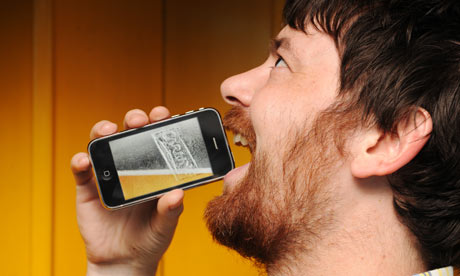
Since they launched last July, iPhone applications have become one of the fastest - and most popular - technological innovations ever. There are thousands of simple and free apps, including ones that are altering the face of music
It can create a virtual pint, electronic flute or whoopee cushion; help you to beat traffic while avoiding speed cameras; let you read the complete works of Shakespeare; control your home television from the office; tell you the time anywhere in the world; or simply guide you to the nearest place to purchase a decent latte.
In fact, there does not appear to be much (bar enhancing your love life or curing a hangover) that an iPhone app cannot do - and that is why it has become one of the fastest-growing technological innovations of recent times.
More than 25,000 have been created - often by individuals working from home - and they have been downloaded more than 800 million times from the online iPhone App Store. From Coldplay to Manchester United, institutions of every shape and size are scrambling to get a piece of the action. Even Steve Jobs, Apple's CEO, was surprised at the initial success, exclaiming: "I've never seen anything like this in my career in software."
Now Trent Reznor, lead singer in a band at the vanguard of bringing technology into the music industry, plans to take things a step further, creating an app that will transform the experience of being a Nine Inch Nails fan.
NIN: Access, which is awaiting approval from Apple, could be one way forward for a music industry decimated by downloading in recent years. The application, which will be downloadable free, will let users start multiple conversations with strangers at gigs, locate other NIN fans in their vicinity, stream music, download photos and upload their own remixes. It will create an NIN community orchestrated by the band itself - not by any record company and not via any of the many social networking sites such as MySpace or Facebook.
"People are going to steal your music whether you like it or not; it's out there, it's free," said Reznor in an interview with the Observer. "You're never going to make a lot of money selling records like you used to, that's a fact. It's over."
And if the latest research is anything to go by, access to music is exactly what iPhone apps fans are after.
A survey, carried out by comScore Inc - a marketing research company - found that the single most popular app to date is Tap Tap Revenge, which has been downloaded by a third of those using the App Store. The iPhone equivalent of the Guitar Hero or Dance Dance Revolution rhythm games, Tap Tap Revenge allows the reader to play or tap along to music and the company has already linked up to the likes of Reznor to customise versions of the game.The latest is Tap Tap Revenge: Coldplay Edition, released last week, which, should you be so inclined, allows you to tap along to 10 of Coldplay's greatest hits including Yellow and Viva La Vida.
The study found that the best - and generally most successful apps - utilised the iPhone's hardware, such as its motion sensor or GPS.
It also revealed that 12 of the top 25 most popular applications were games, including versions of classics such as Hangman and Pacman, while social networking applications proved popular.
"With the amount of downloads they've had since the App Store launched last July, it must be one of the fastest rising businesses since the launch of the internet," said David Rowan, editor of the newly launched Wired UK magazine. "What's good about the App Store is that there's quite a low barrier to entry, so many of these programmers actually have day jobs and are just working on these apps in their spare time."
Individuals can download the software, create their own application, and for a one-off fee of $99 (£68) register as a developer with Apple, and then have it stocked in the App Store. If they do decide to charge for their application, they can set the price, and keep 70% of the charge, with 30% going to Apple.
Most applications in the store are written by third-party developers. For some this has been a return to the early days of the internet, or even computing itself, when young aspiring developers could make a living from their bedrooms.
A major part of the App Store's success is down to its simplicity and pricing. Most of the apps are free or a nominal price such as 49p. As one developer puts it: "If an app only cost 49p, people don't mind if they only use it once or twice, and it's not even the end of the world if it actually turns out to be a bit crap."
Ross McKillop, who developed the MMS application, which allows users to send and receive pictures and video (frustratingly, the iPhone can't receive a picture text message, although the next model will rectify that), thinks the reason iPhone App has taken off is simple: "We've had mobile phones with internet access for years, but it was so sluggish and non-user-friendly that hardly anyone bothered using it."
Malcolm Barclay has a background in computers but is a self-taught programmer who saw a gap for an application that offered updates on the London Underground. "The idea doesn't have to be unique," he said. "It's not rocket science that you might want to be able to retrieve Tube information on your phone, it just comes down to execution. I just wanted to make it so simple and easy to use, and of course I made it free, so there was no reason not to try it."
After the success of Barclay's TubeStatus, he was deluged with requests to provide a fuller package including maps and a journey planner option. "I thought someone else would do it, but after a few months no one had, so I just did it myself." TubeDeluxe sells for 59p.
The concept took shape for Nine Inch Nails one night last summer when Reznor was "fooling around" with his phone backstage before a gig and noticed fans queuing to get in were already uploading pictures of the scene. "So we then communicated with them and said, 'We're backstage' and that freaked them out," explained Reznor. "But that got the wheels turning and we thought, 'How can we develop that?' "
The fact that NIN are not tied to a record label frees them to experiment with such new ideas. "Record labels do not know how to deal with the new media environment that they're confronted with," he added. "They've made their fortunes selling plastic discs and now no one wants to buy plastic discs - they're just trying to get their fingers in every other pie, but they're so greedy and ignorant they're not prepared to do what they have to do." The key to success, argued Reznor, is not to see the apps primarily as a way to make money: "All we're trying to do is make something cool. Something that as a fan you'd say, 'Hey, I want to have that'. If we can monetise it, then that's fine, no problem."
The notion of thousands of fans talking at a concert via their iPhone may sound hellish to old-fashioned gig goers. "On a personal level, I do find that kind of silly," agreed Reznor. "I tend to not take cameras on vacation any more as I want to experience that moment as a human, not as a documenter. At a concert, it's up to them, I can't tell them how to experience a concert. If that makes you feel like you had a better time, holding a phone up the whole time, then OK."
Naturally, Apple's competitors are keen to move into the market. The main competitors are Google Android Market, launched in October last year, for phones that run on the Android system, Nokia's Ovi store, and the just launched Blackberry App Store. Microsoft is also planning to launch a Windows Marketplace later this year. "Nothing keeps still for very long in this field," said Rowan, "and when you have a booming market dominated by one company, other people are going to look at it."
A few developers have made a small fortune, but McKillop has a sober word for anyone looking to cash in: "We certainly haven't made a fortune from our application. Although we have got a lot of other work through it. I believe the guy who created the iFart [whoopee cushion] is a millionaire though ... draw your own conclusions from that."
In fact, there does not appear to be much (bar enhancing your love life or curing a hangover) that an iPhone app cannot do - and that is why it has become one of the fastest-growing technological innovations of recent times.
More than 25,000 have been created - often by individuals working from home - and they have been downloaded more than 800 million times from the online iPhone App Store. From Coldplay to Manchester United, institutions of every shape and size are scrambling to get a piece of the action. Even Steve Jobs, Apple's CEO, was surprised at the initial success, exclaiming: "I've never seen anything like this in my career in software."
Now Trent Reznor, lead singer in a band at the vanguard of bringing technology into the music industry, plans to take things a step further, creating an app that will transform the experience of being a Nine Inch Nails fan.
NIN: Access, which is awaiting approval from Apple, could be one way forward for a music industry decimated by downloading in recent years. The application, which will be downloadable free, will let users start multiple conversations with strangers at gigs, locate other NIN fans in their vicinity, stream music, download photos and upload their own remixes. It will create an NIN community orchestrated by the band itself - not by any record company and not via any of the many social networking sites such as MySpace or Facebook.
"People are going to steal your music whether you like it or not; it's out there, it's free," said Reznor in an interview with the Observer. "You're never going to make a lot of money selling records like you used to, that's a fact. It's over."
And if the latest research is anything to go by, access to music is exactly what iPhone apps fans are after.
A survey, carried out by comScore Inc - a marketing research company - found that the single most popular app to date is Tap Tap Revenge, which has been downloaded by a third of those using the App Store. The iPhone equivalent of the Guitar Hero or Dance Dance Revolution rhythm games, Tap Tap Revenge allows the reader to play or tap along to music and the company has already linked up to the likes of Reznor to customise versions of the game.The latest is Tap Tap Revenge: Coldplay Edition, released last week, which, should you be so inclined, allows you to tap along to 10 of Coldplay's greatest hits including Yellow and Viva La Vida.
The study found that the best - and generally most successful apps - utilised the iPhone's hardware, such as its motion sensor or GPS.
It also revealed that 12 of the top 25 most popular applications were games, including versions of classics such as Hangman and Pacman, while social networking applications proved popular.
"With the amount of downloads they've had since the App Store launched last July, it must be one of the fastest rising businesses since the launch of the internet," said David Rowan, editor of the newly launched Wired UK magazine. "What's good about the App Store is that there's quite a low barrier to entry, so many of these programmers actually have day jobs and are just working on these apps in their spare time."
Individuals can download the software, create their own application, and for a one-off fee of $99 (£68) register as a developer with Apple, and then have it stocked in the App Store. If they do decide to charge for their application, they can set the price, and keep 70% of the charge, with 30% going to Apple.
Most applications in the store are written by third-party developers. For some this has been a return to the early days of the internet, or even computing itself, when young aspiring developers could make a living from their bedrooms.
A major part of the App Store's success is down to its simplicity and pricing. Most of the apps are free or a nominal price such as 49p. As one developer puts it: "If an app only cost 49p, people don't mind if they only use it once or twice, and it's not even the end of the world if it actually turns out to be a bit crap."
Ross McKillop, who developed the MMS application, which allows users to send and receive pictures and video (frustratingly, the iPhone can't receive a picture text message, although the next model will rectify that), thinks the reason iPhone App has taken off is simple: "We've had mobile phones with internet access for years, but it was so sluggish and non-user-friendly that hardly anyone bothered using it."
Malcolm Barclay has a background in computers but is a self-taught programmer who saw a gap for an application that offered updates on the London Underground. "The idea doesn't have to be unique," he said. "It's not rocket science that you might want to be able to retrieve Tube information on your phone, it just comes down to execution. I just wanted to make it so simple and easy to use, and of course I made it free, so there was no reason not to try it."
After the success of Barclay's TubeStatus, he was deluged with requests to provide a fuller package including maps and a journey planner option. "I thought someone else would do it, but after a few months no one had, so I just did it myself." TubeDeluxe sells for 59p.
The concept took shape for Nine Inch Nails one night last summer when Reznor was "fooling around" with his phone backstage before a gig and noticed fans queuing to get in were already uploading pictures of the scene. "So we then communicated with them and said, 'We're backstage' and that freaked them out," explained Reznor. "But that got the wheels turning and we thought, 'How can we develop that?' "
The fact that NIN are not tied to a record label frees them to experiment with such new ideas. "Record labels do not know how to deal with the new media environment that they're confronted with," he added. "They've made their fortunes selling plastic discs and now no one wants to buy plastic discs - they're just trying to get their fingers in every other pie, but they're so greedy and ignorant they're not prepared to do what they have to do." The key to success, argued Reznor, is not to see the apps primarily as a way to make money: "All we're trying to do is make something cool. Something that as a fan you'd say, 'Hey, I want to have that'. If we can monetise it, then that's fine, no problem."
The notion of thousands of fans talking at a concert via their iPhone may sound hellish to old-fashioned gig goers. "On a personal level, I do find that kind of silly," agreed Reznor. "I tend to not take cameras on vacation any more as I want to experience that moment as a human, not as a documenter. At a concert, it's up to them, I can't tell them how to experience a concert. If that makes you feel like you had a better time, holding a phone up the whole time, then OK."
Naturally, Apple's competitors are keen to move into the market. The main competitors are Google Android Market, launched in October last year, for phones that run on the Android system, Nokia's Ovi store, and the just launched Blackberry App Store. Microsoft is also planning to launch a Windows Marketplace later this year. "Nothing keeps still for very long in this field," said Rowan, "and when you have a booming market dominated by one company, other people are going to look at it."
A few developers have made a small fortune, but McKillop has a sober word for anyone looking to cash in: "We certainly haven't made a fortune from our application. Although we have got a lot of other work through it. I believe the guy who created the iFart [whoopee cushion] is a millionaire though ... draw your own conclusions from that."
Subscribe to:
Posts (Atom)